Archonialis-Deep-Space
The More You Know...
Friday, April 24, 2026
What is a merkaba?
Polymath Robert Edward Grant
Robert Edward Grant is a contemporary figure who has attracted attention across a wide range of fields, including business, mathematics, music, and alternative historical research. Often described as a “polymath,” Grant represents a modern blend of entrepreneur and independent thinker, someone who operates both within conventional systems—such as corporate leadership—and outside them, exploring ideas that challenge mainstream perspectives.
Born in the United States, Grant built his early career in the corporate world. He is best known as the founder and CEO of Strathspey Crown, a medical device company specializing in aesthetic technologies. Under his leadership, the company developed innovative products used in cosmetic procedures, contributing to the rapidly growing global aesthetics industry. His success in this sector reflects a strong background in business strategy, engineering, and innovation, positioning him as a respected figure in entrepreneurial circles.
However, what sets Grant apart from many other business leaders is his simultaneous engagement with intellectual and creative pursuits. Beyond his corporate achievements, he has developed a reputation for exploring mathematics, sacred geometry, ancient civilizations, and what he often refers to as “lost knowledge.” This combination of disciplines is unusual, and it has helped him cultivate a following among those interested in alternative interpretations of history and science.
Grant’s work in mathematics is particularly notable. Despite not being formally trained as a mathematician in the traditional academic sense, he has published papers and presented theories related to geometry and number patterns. His research often focuses on identifying hidden symmetries in geometric forms and exploring relationships between constants such as pi (π) and phi (φ). He argues that these relationships are not only mathematical curiosities but may also have deeper implications for understanding the structure of reality itself.
A recurring theme in his work is the concept of “rediscovery.” Grant suggests that many advanced ideas in mathematics and science may have been known to ancient civilizations but were lost over time. He frequently references cultures such as the Egyptians and Greeks, proposing that their knowledge of geometry and proportion was far more sophisticated than is commonly acknowledged. According to Grant, revisiting these ancient insights could lead to breakthroughs in modern science.
This perspective naturally places him at the intersection of mainstream scholarship and more controversial or speculative fields. Critics argue that some of his claims lack rigorous evidence or rely too heavily on interpretation rather than empirical proof. Supporters, on the other hand, see him as a visionary thinker who is willing to question established narratives and explore unconventional ideas.
In addition to mathematics and history, Grant is also deeply involved in music and acoustics. He is a skilled musician who has composed and performed pieces that he claims are influenced by mathematical principles and harmonic ratios. For him, music is not just an art form but also a way of expressing the underlying patterns of the universe. This idea echoes ancient philosophical traditions, such as the concept of the “music of the spheres,” which suggests that cosmic order can be understood through harmony and vibration.
Another important aspect of Grant’s work is his interest in consciousness and human potential. He often speaks about the idea that individuals have untapped abilities, particularly in areas like intuition and creativity. Through lectures, interviews, and online content, he encourages people to explore these capacities and to question the limits imposed by conventional education and societal expectations.
Grant has also gained visibility through his media presence. He frequently appears on podcasts, documentaries, and online platforms where he discusses topics ranging from ancient artifacts to modern physics. These appearances have helped him reach a global audience, particularly among those interested in alternative history and interdisciplinary thinking. His communication style is accessible and enthusiastic, which makes complex ideas more approachable for non-specialists.
One of the more debated areas of his work involves archaeological interpretations. Grant has participated in explorations of ancient sites and artifacts, sometimes proposing interpretations that differ significantly from established academic consensus. For example, he has suggested that certain artifacts may encode mathematical knowledge or that ancient structures were designed with advanced geometric precision. While these ideas are intriguing, they are often met with skepticism from professional archaeologists and historians, who emphasize the importance of evidence-based analysis.
Despite the controversies, Grant’s influence continues to grow. His ability to connect diverse fields—business, mathematics, music, and history—resonates with a broad audience that values interdisciplinary approaches. In a world where specialization is often the norm, his work stands out as an example of how different domains of knowledge can intersect and inform one another.
It is also worth noting that Grant’s career reflects a broader cultural trend. In recent years, there has been increasing interest in holistic and integrative ways of understanding the world. People are looking beyond traditional boundaries, seeking connections between science, art, spirituality, and history. Grant’s work fits neatly into this context, offering a perspective that emphasizes unity and interconnectedness.
At the same time, his example highlights the importance of critical thinking. While exploring new ideas can be valuable, it is equally important to evaluate claims carefully and distinguish between evidence-based conclusions and speculative interpretations. This balance is essential for meaningful progress, whether in science, history, or any other field.
In conclusion, Robert Edward Grant is a multifaceted figure whose work spans a remarkable range of disciplines. From his success as a business leader to his explorations of mathematics, music, and ancient knowledge, he embodies the idea of the modern polymath. Whether viewed as a visionary innovator or a controversial thinker, his contributions have sparked discussion and inspired curiosity. Ultimately, his work invites people to look beyond conventional boundaries and to consider the possibility that knowledge—both old and new—may be more interconnected than it first appears.
Thursday, April 23, 2026
David Wilcock
David Wilcock was one of those figures who sat at the intersection of alternative spirituality, conspiracy culture, and internet-era media. Whether viewed as a whistleblower, a storyteller, or a controversial personality, his work attracted a loyal following—and equally strong skepticism.
Early Life and Background
Born in 1973 in New York, David Wilcock first came to public attention through his claims of being the reincarnation of Edgar Cayce, the famous early 20th-century psychic known as the “Sleeping Prophet.” Wilcock said that similarities in their life patterns and philosophies supported this idea, though such claims were widely disputed by both skeptics and mainstream historians.
Wilcock studied psychology at the State University of New York at New Paltz, which he often referenced as a foundation for his later work exploring consciousness, dreams, and metaphysical phenomena. However, it was not academia that defined his career—it was the rise of the internet.
Rise to Online Prominence
In the late 1990s and early 2000s, Wilcock began publishing content on his website, sharing ideas about spirituality, extraterrestrial life, hidden technologies, and secret government programs. His writing style—confident, expansive, and often blending science with speculative ideas—quickly gained traction among audiences interested in alternative explanations of reality.
A major turning point came with his association with David Icke and similar figures, who were already popularizing theories about global control systems, hidden elites, and non-human influences on Earth. Wilcock’s work echoed many of these themes but added a more spiritual and “cosmic evolution” angle.
Core Beliefs and Themes
At the heart of Wilcock’s content were a few recurring ideas:
-
Ascension and Consciousness Evolution
Wilcock often spoke about humanity undergoing a transformation in consciousness—a shift sometimes referred to as “ascension.” This idea drew loosely from New Age spirituality and suggested that humans were evolving into higher states of awareness. -
Extraterrestrial Disclosure
He repeatedly claimed that governments—particularly the United States—were hiding evidence of extraterrestrial contact. According to Wilcock, disclosure was inevitable and would fundamentally change human society. -
Secret Space Programs
One of his more controversial topics involved alleged secret space fleets and advanced technologies. These claims were largely based on testimonies from self-identified insiders, which were not verified. -
Financial and Political Conspiracies
Wilcock also discussed global financial systems, often suggesting that hidden groups exerted control over economies and governments. These ideas overlapped with broader conspiracy narratives that circulated online.
Gaia and Mainstream Exposure
Wilcock reached a wider audience through his work with Gaia Inc., a platform focused on spirituality, yoga, and alternative theories. His show, Wisdom Teachings, presented his ideas in a more polished, episodic format, making them more accessible to a broader audience.
Through Gaia, Wilcock collaborated with other well-known figures in the alternative media space, including Corey Goode, whose claims about secret space programs became a central part of Wilcock’s later work.
Criticism and Controversy
It was impossible to discuss David Wilcock without addressing the criticism surrounding him. Many scientists, journalists, and skeptics argued that his claims lacked credible evidence and relied heavily on anecdotal testimony or reinterpretations of existing science.
Organizations dedicated to debunking pseudoscience often categorized his work as speculative at best and misleading at worst. Critics pointed out that:
- His scientific references were frequently taken out of context.
- His sources were often unverifiable.
- His predictions about major events (such as imminent disclosure or global shifts) did not materialize as described.
Even within the alternative media community, Wilcock faced disputes—particularly regarding collaborations and disagreements with former colleagues.
Why People Followed Him
Despite the criticism, Wilcock attracted a significant audience. Understanding why required looking beyond the factual accuracy of his claims.
For many followers, his work offered:
- A sense of meaning in a complex and often confusing world
- Hope for transformation, both personal and global
- A narrative framework that connected spirituality, science, and geopolitics
- A reinforcement of distrust toward mainstream institutions
In an era where traditional authorities were increasingly questioned, figures like Wilcock filled a gap by offering alternative explanations—whether or not those explanations held up to scrutiny.
The Broader Context
David Wilcock was not an isolated phenomenon. He was part of a larger ecosystem of online personalities who blended spirituality, conspiracy theories, and entertainment. This ecosystem grew significantly with platforms like YouTube and subscription-based streaming services.
His work also reflected a broader cultural trend: the merging of New Age spirituality with conspiracy thinking. This combination proved compelling because it provided both a critique of the world and a promise of personal empowerment.
A Balanced Perspective
It was worth approaching Wilcock’s work with a clear distinction between belief, speculation, and evidence. While his ideas could be engaging and imaginative, they often lacked the kind of verifiable support that would make them reliable sources of factual information.
At the same time, dismissing his popularity outright missed something important: people were drawn to narratives that made sense of uncertainty. Wilcock’s success said as much about the audience as it did about the content itself.
Conclusion
David Wilcock remained a polarizing figure throughout his life. To some, he was a visionary who shared hidden truths; to others, he was a promoter of unfounded theories. The reality likely sat somewhere in between: a skilled communicator who built a platform around ideas that resonated with a particular audience.
If readers chose to explore his work, it was best done with curiosity—but also with critical thinking. That balance remained essential when navigating any content that sat outside established scientific and historical consensus.
David sadly died by suicide on April 20, 2026, at age 53.
Boulder County Sheriff's deputies responded to a 911 call around 10:44 a.m. near Nederland, Colorado, regarding a mental health crisis outside a residence on Ridge Road. They arrived shortly after and encountered Wilcock holding a weapon; he used it on himself within minutes and was pronounced dead at the scene. No other individuals were found on the property, and authorities stated there was no public threat.
Wilcock was known for books like *The Source Field Investigations*, appearances on *Ancient Aliens*, and claims of telepathic alien contact or reincarnation as Edgar Cayce. Recent reports noted a distressing livestream two days prior warning about missing scientists, sparking speculation, though officials ruled it a suicide with an ongoing coroner's review.
The Boulder County Coroner's Office confirmed his identity and cause of death on April 22. US Rep. Anna Paulina Luna announced the news on social media, prompting tributes from the ufology community.
Wednesday, April 22, 2026
Conspiracies: Phil Schneider
Phil Schneider: The Man Who Claimed to Know Too Much
In the world of conspiracy theories and UFO lore, few figures are as intriguing—or as controversial—as Phil Schneider. Emerging in the early 1990s, Schneider captivated audiences across the United States with a series of lectures that blurred the line between whistleblowing and science fiction. To some, he was a courageous insider revealing hidden truths. To others, he was a deeply troubled man whose claims lacked any credible evidence. Decades later, his story continues to circulate, raising questions about belief, secrecy, and the human fascination with the unknown.
A Life Shrouded in Mystery
According to his own accounts, Schneider was born in 1947 and trained as a geologist and engineer. He claimed to have worked on classified government projects, particularly the construction of deep underground military bases—often referred to as DUMBs (Deep Underground Military Bases). These facilities, he said, were part of a vast hidden infrastructure beneath the United States, built for purposes far removed from public knowledge.
Schneider also alleged that his father had been involved in the development of advanced military technologies, further tying him to a legacy of secrecy and national defense. However, documentation supporting these claims is sparse, and much of what is known about his background comes from Schneider himself.
The Dulce Base Incident
The cornerstone of Schneider’s story is a dramatic and often-repeated claim: a violent encounter with extraterrestrial beings at a secret underground facility near Dulce, New Mexico. According to Schneider, he was part of a team drilling deep beneath the surface when they broke into a cavern inhabited by alien entities.
He described a chaotic firefight in which both humans and aliens were killed. Schneider claimed he was injured during the encounter, losing several fingers and suffering lasting health effects. This alleged event, often referred to as the “Dulce Base incident,” became central to his public talks and helped cement his reputation within UFO circles.
There is, however, no verifiable evidence that such an event ever occurred. No official records, eyewitness testimonies, or physical proof have substantiated Schneider’s account. Nevertheless, the story remains a staple in conspiracy communities, frequently cited as evidence of secret government-alien collaboration.
Lectures and Rising Popularity
In the years leading up to his death, Schneider traveled extensively, delivering lectures on what he claimed were hidden truths about the U.S. government. These talks covered a wide range of topics, including:
- Secret underground bases across the country
- Advanced technologies allegedly derived from extraterrestrial sources
- Government treaties with alien species
- The concealment of this information from the public
Schneider often presented physical evidence during his talks, including what he claimed were samples of exotic metals and photographs of underground facilities. He also displayed his injuries as proof of his involvement in dangerous, classified operations.
His presentations were compelling, if not theatrical, and attracted audiences eager to hear what he described as insider knowledge. In the broader context of the 1990s—an era marked by growing distrust of institutions and a surge in UFO interest fueled by shows like The X-Files—his message found a receptive audience.
Death and Speculation
In January 1996, Schneider was found dead in his apartment in Oregon. Authorities ruled the death a suicide, citing evidence that he had taken his own life. However, the circumstances quickly became a point of contention among his supporters.
Many who believed Schneider’s claims argued that his death was suspicious, suggesting he had been silenced to prevent further disclosures. They pointed to his public statements, in which he expressed fear for his safety, as evidence that he may have been targeted.
Skeptics, on the other hand, note that Schneider had a history of health issues and personal struggles, which may have contributed to his mental state. Without concrete evidence of foul play, the official ruling remains unchanged, though debate continues in conspiracy circles.
Evaluating the Claims
When examining Schneider’s story, it is important to distinguish between narrative and evidence. His claims are undeniably dramatic, but they lack the kind of corroboration typically required for verification. Independent investigations have not confirmed the existence of the underground bases he described, nor the alleged alien encounters.
Experts in geology and engineering have also questioned the feasibility of some of his assertions, particularly regarding the scale and secrecy of the supposed underground network. While governments do maintain classified facilities, the scope described by Schneider would require enormous resources and coordination, making total secrecy highly unlikely.
Additionally, no credible documentation has surfaced to support his employment history or involvement in the projects he described. This absence of evidence has led most researchers and journalists to categorize his story as unverified at best.
Why His Story Persists
Despite the lack of proof, Schneider’s story continues to circulate—and even thrive—decades after his death. This persistence can be attributed to several factors.
First, his narrative taps into a deep-seated curiosity about the unknown. The idea that governments might be hiding extraordinary truths is both unsettling and compelling, inviting speculation and imagination.
Second, Schneider presented himself as a whistleblower, a role that carries a certain cultural weight. In an era where real whistleblowers have exposed genuine misconduct, it can be difficult for audiences to distinguish between credible revelations and unfounded claims.
Finally, the lack of definitive answers surrounding his death adds an element of mystery that keeps the story alive. Unresolved questions often invite interpretation, allowing different communities to shape the narrative according to their beliefs.
A Modern Myth?
Whether viewed as a cautionary tale, a modern myth, or a misunderstood individual, Phil Schneider occupies a unique place in contemporary folklore. His story sits at the intersection of science fiction, conspiracy theory, and personal testimony, making it both fascinating and difficult to fully assess.
For those interested in UFOs and government secrecy, Schneider’s claims offer a dramatic, if unproven, account of hidden worlds beneath our feet. For skeptics, his story serves as a reminder of the importance of evidence and critical thinking.
Conclusion
Ultimately, the legacy of Phil Schneider is less about what he proved and more about what he represents. His story highlights the enduring human desire to uncover hidden truths, even in the absence of solid evidence. It also underscores the challenges of navigating a world where information—both real and imagined—can spread rapidly and take on a life of its own.
As with many figures in the realm of conspiracy theories, the truth about Schneider may never be fully known. What remains is a narrative that continues to intrigue, divide, and inspire debate—a testament to the power of storytelling in shaping how we understand the unknown.
Sunday, February 8, 2026
The Mysterious Death of Stanley Meyer
Stanley Meyer (1940–1998) was an American inventor who became widely known for claiming that he had developed a technology capable of running a vehicle using water as its main fuel source. His invention is often referred to as the “water fuel cell,” and it attracted attention from alternative energy supporters as well as strong criticism from the scientific community.
Meyer said that his system worked by splitting water into hydrogen and oxygen, which could then be used as fuel in an internal combustion engine. Unlike conventional electrolysis, which requires a significant amount of electrical energy, Meyer claimed his method used electrical pulses and resonance to break the bonds of the water molecule far more efficiently. According to him, this meant that water could be used as a cheap and abundant source of energy.
During the late 1980s and early 1990s, Meyer demonstrated a dune buggy that he said was powered by this technology. These demonstrations gained media attention and attracted investors. Meyer also obtained several patents related to hydrogen generation and fuel systems. However, holding a patent does not prove that an invention works as claimed; it only protects the idea or design.
Scientists and engineers who examined Meyer’s claims argued that they violated basic laws of physics and chemistry. Water is already a stable compound, and splitting it requires at least as much energy as can be recovered later. Independent tests failed to confirm Meyer’s results. In 1996, a court in Ohio ruled against Meyer in a fraud case, concluding that his device did not function as he claimed, and he was ordered to return investors’ money.
Meyer died in 1998, reportedly from a cerebral aneurysm. His sudden death led to speculation and conspiracy theories, with some supporters suggesting foul play, although no evidence has supported these claims.
Today, Stanley Meyer remains a controversial figure. To some, he is seen as a visionary inventor whose work was suppressed. To others, he is an example of how extraordinary energy claims must be supported by clear, reproducible scientific evidence. His story is often used as a case study in discussions about alternative energy, pseudoscience, and the importance of scientific verification.
Electromagnetic Laser Pulsation
Thursday, February 5, 2026
Who or What is the Kandahar Giant?
Tuesday, February 3, 2026
Whistleblower Dan Burisch
Wednesday, January 14, 2026
Bob Lazar's claim about Zeta Reticuli
Bob Lazar came to public attention in 1989 after revealing details of his work on a highly classified government project involving non-human technology. According to his account, he was employed as a physicist at a secure facility known as S-4, located near Area 51 in Nevada. His role was to assist in the study and reverse-engineering of advanced spacecraft that were not of human origin.
Lazar explained that the craft he worked on were unlike any conventional aircraft. They were disc-shaped and operated using a gravity-based propulsion system. Rather than relying on combustion, wings, or thrust, these vehicles generated and amplified gravity waves, allowing them to bend space-time itself. This technology enabled silent operation, sudden acceleration, and seamless directional changes, both in space and within planetary atmospheres.
Central to Lazar’s account was the origin of the spacecraft. He stated that briefing documents he was allowed to read identified their source as the Zeta Reticuli star system, a binary system located roughly 39 light-years from Earth. This system had already appeared in earlier extraterrestrial contact narratives, and Lazar’s information aligned with those earlier references, reinforcing the idea of Zeta Reticuli as a point of origin for non-human intelligence interacting with Earth.
At S-4, Lazar described the presence of multiple recovered craft, explaining that several vehicles were housed in individual hangars carved into the mountainside. Each craft was studied separately, with scientists assigned to specific components to prevent any one individual from understanding the entire system. Lazar himself focused on the propulsion mechanism and the reactor that powered it.
He also spoke in detail about a material he referred to as Element 115, used as the fuel source for the craft. According to Lazar, this element produced a gravity field when bombarded with protons, enabling the reactor to function. He stated that the element was stable and unlike any material publicly known at the time, forming the foundation of the propulsion technology.
Lazar further explained that the secrecy surrounding the project was absolute. Information was strictly compartmentalised, access was temporary, and personnel were monitored closely. The objective, as he described it, was not innovation but understanding: humanity attempting to comprehend technology developed by an intelligence far more advanced than its own.
Bob Lazar’s account presents a coherent narrative of extraterrestrial technology, government containment, and interstellar origin. His description of craft originating from Zeta Reticuli offers a clear and consistent explanation for the source of the vehicles studied at S-4, framing them as evidence of contact with a non-human civilisation and positioning Earth as the subject of long-term external observation.
Wednesday, January 7, 2026
Can you feel the Schumann Resonance?
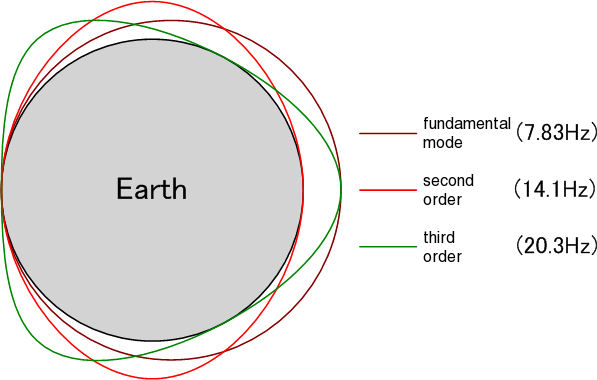
The Schumann resonance is a set of extremely low-frequency electromagnetic vibrations that occur naturally in the space between the Earth’s surface and the ionosphere. You can think of this space as a giant resonant cavity that “rings” electrically, a bit like a bell, whenever it’s excited by lightning strikes around the planet. See the pictures below.


Here’s how it works in simple terms:
Lightning flashes happen constantly worldwide (tens of times per second). Each strike sends out electromagnetic waves. Some of these waves get trapped between the Earth and the ionosphere and bounce around the planet. At certain specific frequencies, the waves reinforce each other instead of cancelling out. These reinforced frequencies are the Schumann resonances.
The fundamental (main) frequency is about 7.83 Hz, with higher harmonics around 14, 20, 26, 33 Hz, and so on. These frequencies are extremely low—far below radio waves—and you cannot hear them as sound.
Why it matters scientifically:
It helps scientists study global lightning activity
It provides information about the ionosphere’s condition
It’s useful in monitoring climate patterns and even solar activity
It confirms basic predictions of electromagnetic physics made in the 1950s
Human brainwaves (especially alpha waves) happen to fall in a similar frequency range (around 8–12 Hz)
This has led to claims that Schumann resonance directly affects consciousness, mood, or health
The field strength of Schumann resonance is extremely weak, far weaker than everyday electromagnetic exposure
In short:
Schumann resonance is real and well-established physics
It’s caused by lightning interacting with Earth’s atmosphere
Tuesday, January 6, 2026
Was Al Bielek telling the truth?
Al Bielek is a figure who occupies a strange and enduring space between conspiracy lore, speculative physics, and personal testimony. He presented himself not as a theorist but as a participant, a man who claimed to have lived through events so extraordinary that they permanently removed him from the boundaries of accepted history. According to his account, he was born in 1927 and lived an apparently ordinary early life, yet beneath that surface lay suppressed memories of secret government experiments involving time travel, mind control, and advanced technology far beyond what the public believes possible.
Central to Bielek’s narrative is the Philadelphia Experiment, an alleged US Navy project during World War II in which the destroyer escort USS Eldridge was rendered invisible using electromagnetic fields. Bielek claimed not only that the experiment occurred, but that he was physically present during its execution in 1943. In his telling, the experiment went catastrophically wrong: sailors were fused into the metal of the ship, others went mad, and some vanished entirely. He stated that he and his brother jumped off the ship during the experiment and were propelled through time, first to the year 1983 and later to 2137. These temporal displacements, he said, exposed him to future technologies, social structures, and catastrophic global events that shaped the rest of his life.
A key feature of Bielek’s story is the idea of memory suppression and later recovery. He maintained that after being returned to the mid-20th century, his memories were deliberately erased using advanced psychological and technological techniques. For decades, he lived without conscious awareness of what had happened, working as an engineer and leading what appeared to be a conventional life. It was only in the late 1980s, he claimed, that his memories were triggered and gradually returned, prompting him to begin speaking publicly about his experiences. This delayed revelation became both a cornerstone of his credibility among supporters and a major point of scepticism among critics.
Bielek’s accounts extended far beyond the Philadelphia Experiment itself. He spoke at length about Project Montauk, an alleged continuation of wartime experiments conducted at Camp Hero on Long Island. According to him, Montauk involved not only time travel but also psychic amplification, mind control, and contact with non-human intelligences. He described children being used as experimental subjects and claimed that the project created rifts in space-time that threatened reality itself. In these narratives, Bielek positioned himself as both witness and reluctant participant, someone who understood the moral horror of what was being done but felt powerless to stop it.
Another striking element of his testimony was his description of the future. Bielek asserted that he had seen timelines in which environmental collapse, authoritarian global governance, and widespread social upheaval dominated the 21st century. He often spoke of multiple timelines, suggesting that the future was not fixed but probabilistic, shaped by human choices. This allowed him to explain why some of his predictions did not unfold exactly as described, while still maintaining the internal coherence of his worldview. For his followers, this flexibility made his warnings more urgent; for critics, it made them unfalsifiable.
Sceptics have pointed out numerous inconsistencies in Bielek’s claims, including discrepancies in dates, technical descriptions that do not align with known physics, and the lack of corroborating evidence from military records. Historians note that the USS Eldridge’s documented movements do not match the Philadelphia Experiment narrative, and physicists argue that the technologies described would require energy levels far beyond what was available in the 1940s. Psychological explanations have also been proposed, ranging from confabulation to the influence of existing science fiction and conspiracy literature on memory formation.
Yet dismissing Bielek purely on factual grounds does not fully explain his lasting influence. His talks, interviews, and recordings resonated with audiences who already sensed that official narratives were incomplete or deceptive. In a late-Cold-War and post-Cold-War context marked by secrecy, black projects, and genuine government deception, his stories felt emotionally plausible even when empirically unsupported. He spoke calmly and methodically, using technical language and a measured tone that contrasted with the more sensational style of many conspiracy figures, which for some listeners enhanced his perceived credibility.
Culturally, Bielek’s work sits at the intersection of science fiction, mistrust of authority, and existential anxiety about the future. His narratives echo themes found in twentieth-century literature and film: the fear that technological progress outpaces moral responsibility, the idea that time itself may be manipulated by those in power, and the suspicion that ordinary people are excluded from truths that fundamentally shape their lives. Whether taken literally or symbolically, his stories function as modern myths, expressing collective concerns about control, memory, and the fragility of reality.
In his later years, Bielek continued to give lectures and interviews, presenting himself as a whistleblower rather than a prophet. He insisted that his purpose was not to frighten but to inform, to encourage critical thinking and resistance to blind acceptance of authority. After his death in 2011, his legacy persisted online, where recordings of his talks circulate alongside debates dissecting every aspect of his claims. To some, he remains a courageous truth-teller who revealed secrets too vast for official acknowledgment. To others, he is an example of how compelling narratives can arise from a mixture of belief, memory, and imagination.
Ultimately, Al Bielek’s significance may lie less in whether his accounts are factually true and more in what they reveal about human psychology and culture. His story demonstrates how personal testimony can challenge established history, how narratives of hidden knowledge gain power in times of uncertainty, and how the boundary between reality and belief is negotiated not only through evidence but through trust, fear, and hope. Whether viewed as a witness to impossible events or as a creator of a modern legend, Bielek remains a fascinating figure in the landscape of contemporary mythmaking.
Saturday, January 3, 2026
The Montauk Project
The Montauk Project occupies a strange space between history, myth, psychological speculation, and modern folklore, rooted in a real place that feels almost designed to invite unease. At the easternmost tip of Long Island lies Camp Hero, a decommissioned Cold War installation dominated by a massive concrete radar tower, its silhouette looming against the Atlantic sky. The wind there is constant, the fog thick and unpredictable, and the land itself feels cut off from the rest of the island, as though geography conspires to make it feel separate from ordinary reality. It is this atmosphere—combined with genuine secrecy surrounding Cold War military programs—that allowed the Montauk Project narrative to take hold and endure.
According to the conspiracy theory known as the Montauk Project, Camp Hero did not simply function as a radar station and coastal defense point. Instead, it allegedly became the site of covert experiments that pushed far beyond conventional science, crossing into mind control, time manipulation, and contact with non-human intelligences. Proponents claim that after the closure of earlier psychological warfare programs, the U.S. government relocated its most extreme research to Montauk, exploiting the base’s isolation and subterranean infrastructure. The theory suggests that beneath the visible surface of the base lay extensive underground laboratories, reinforced corridors, and chambers designed to contain experiments that could not be explained—or acknowledged—within existing scientific frameworks.
Central to these claims is the idea that the Montauk Project continued the work of real, documented programs such as MKUltra, in which the CIA conducted unethical experiments involving hypnosis, psychoactive drugs, sensory deprivation, and behavioral conditioning. In the Montauk narrative, these techniques were refined and amplified using electromagnetic fields generated by the radar equipment at Camp Hero. It is said that the tower itself was repurposed, no longer scanning the skies for Soviet bombers but instead transmitting frequencies capable of influencing human perception, memory, and even consciousness. Survivors allegedly emerged with fragmented recollections, dissociative symptoms, and what they described as “missing time,” reinforcing the belief that memories had been deliberately suppressed or altered.
As the story deepens, it moves further from psychology and into speculative physics. Advocates of the theory claim that Montauk scientists discovered ways to manipulate time itself, creating portals or temporal rifts through which objects—and sometimes people—were sent. These experiments supposedly resulted in individuals being displaced across timelines, returned to childhood versions of themselves, or erased entirely from conventional history. Time, within this narrative, is not linear but malleable, a substance that can be folded, compressed, or torn under the right conditions. The most extreme accounts describe accidental breaches that allowed unknown entities to enter our reality, forcing the abrupt shutdown of the project.
One of the most disturbing elements of the Montauk legend is the recurring figure often referred to as the “Montauk Boy,” a young subject said to possess powerful psychic abilities. According to the story, this individual was used as a conduit, his imagination amplified by machines until thoughts manifested physically. Nightmares allegedly took form, becoming real and dangerous, blurring the boundary between mind and matter. This motif—of imagination made tangible—echoes deep psychological fears about the loss of control over one’s inner world, and it is perhaps no coincidence that such imagery resonates strongly in a culture increasingly aware of trauma and dissociation.
The primary source for much of this narrative is Preston Nichols, who, along with collaborators, published accounts in the early 1990s claiming recovered memories and insider knowledge. Nichols described a life fractured by time jumps, erased recollections, and repeated manipulation, presenting himself both as a victim and a reluctant witness. Critics point out that his claims align closely with known patterns of false memory formation, particularly during periods when public awareness of MKUltra and repressed memory theory was widespread. No documents, photographs, or independent testimonies have ever substantiated his account, yet the emotional intensity of the narrative has allowed it to persist, repeated and reshaped across decades.
What grounds the Montauk Project in public imagination is the undeniable reality of Cold War secrecy. Camp Hero was part of the SAGE air defense system, a genuine network designed to detect Soviet threats, and its closure in 1981 left behind an imposing, decaying structure. The silence surrounding its operations, combined with restricted access and a lack of public explanation, created fertile ground for speculation. Humans are deeply uncomfortable with gaps in narrative, and where information is absent, imagination rushes in to fill the void.
Over time, the Montauk Project has evolved into a modern myth, influencing popular culture and inspiring fictional reinterpretations. The most notable example is Stranger Things, which was originally conceived under the working title “Montauk” and borrowed heavily from the themes of secret experiments, psychic children, and alternate dimensions. In this way, the Montauk narrative has fed back into the collective imagination, reinforcing itself through fiction that feels emotionally true even if factually unverified.
At its core, the Montauk Project reflects a deeper cultural anxiety: fear of unseen authority, mistrust of institutions, and uncertainty about the limits of science. It asks unsettling questions about consent, memory, and identity, and it thrives in the liminal space between what is known and what is suspected. Whether interpreted as a literal conspiracy, a psychological phenomenon, or a form of contemporary mythology, the Montauk Project endures because it speaks to a persistent unease—that there may be forces shaping reality beyond our awareness, and that the truth, if uncovered, might be stranger than fiction.
Tuesday, December 2, 2025
Is MAGA a Cult?
Some analysts and political psychologists are cautious about using the word “cult” for MAGA because the term is usually applied to tightly controlled religious or ideological groups that isolate their members and enforce strict obedience. MAGA does not fit that definition in a direct or literal sense. Still, a number of scholars argue that certain segments of the movement exhibit behaviours that resemble cult-like dynamics. They point to the unusually strong emotional attachment many supporters feel toward Donald Trump, where loyalty to the individual leader often becomes more important than loyalty to a traditional party platform or a coherent political ideology. They also highlight the presence of an “us versus them” mindset, in which outside institutions, the media, political opponents, and even members of the same party who disagree with Trump are seen as threats or enemies. In addition, some supporters continue to believe certain claims despite a lack of evidence or after those claims have been rejected by courts and fact-checking bodies, suggesting that for a subset of followers, identity and group loyalty outweigh external information. Social pressure can also play a role in some communities where Republicans who do not align with Trump’s positions experience criticism or exclusion.
On the other hand, many political scientists argue strongly against calling MAGA a cult. They point out that the movement is not a sealed or secretive group that limits members’ access to outside information or prevents them from leaving. People can join or disengage freely, and there is no formal mechanism of coercive control, which is a key characteristic of recognised cults. MAGA also includes a wide variety of people with different motivations: economic anxiety, dissatisfaction with government institutions, cultural conservatism, concerns about immigration, or simply long-standing support for the Republican Party. These varied motivations make the movement broad and heterogeneous rather than uniform and controlling. For these experts, calling MAGA a cult oversimplifies the social, cultural, and political factors that contribute to its popularity and risks turning a complex movement into a caricature rather than analysing it accurately.
A more measured conclusion is that while some supporters demonstrate cult-like or highly devoted patterns of behaviour, the movement as a whole does not meet the criteria used in academic research to classify an organisation as a cult. It is more accurately understood as a populist political movement with a particularly charismatic leader, strong emotional appeal, and intense loyalty among a portion of its base, but without the structural or psychological mechanisms that define true cults.
The Mysterious Movement of Allatra
Allatra began in Ukraine in the early 2010s, emerging from a small spiritual and esoteric community linked to Igor Danilov, a figure who later became the central authority of the movement. Its earliest materials combined metaphysical ideas, prophetic narratives, and spiritual self-help themes designed to appeal to people searching for meaning, alternative belief systems, or explanations for global instability. As the movement grew, it built a sophisticated media operation that published books, videos, online lectures, and documentary-style content, all centred on Danilov's teachings and his portrayal as a uniquely enlightened or spiritually gifted individual. From this nucleus, Allatra expanded rapidly, establishing volunteer groups in many countries, but maintaining its organisational core and leadership structure in Kyiv, Ukraine.
The movement presents itself as a global, volunteer-driven initiative dedicated to solving humanity’s greatest problems. It claims to unite people across continents to work on climate change, environmental collapse, social fragmentation, economic inequality, and the erosion of moral values. Its public-facing identity is based on universal human values, compassion, cooperation, and the idea that all people share a common spiritual origin. It frequently highlights the need for a cultural and moral awakening, framed as essential for humanity’s survival. A central concept promoted by Allatra is the Creative Society, a proposed world system based on peace, unity, shared knowledge, secure living conditions, and the elimination of political and economic corruption. The movement insists that it is non-political, non-commercial, and non-religious, and claims that all work is done purely by volunteers without external funding.
Behind this polished, humanitarian message, however, external observers describe a very different organisation. Researchers, journalists, and experts in new religious movements note that Allatra’s teachings contain a highly structured esoteric cosmology filled with supernatural entities, cosmic conflicts, apocalyptic warnings, and spiritual salvation narratives. Its doctrines describe a dualistic battle between higher spiritual forces and destructive, controlling “powers” influencing humanity. These narratives often blend metaphysics with conspiracy-like ideas and pseudo-scientific language, creating a system that appears rational on the surface but is rooted in unverifiable or fantastical claims. Analysts point out that the movement’s structure, with a single charismatic figure at the top and a large, loyal media apparatus beneath him, resembles that of a sect or cult rather than an open volunteer organisation.
Allatra’s media platforms form one of its most distinctive features. Through numerous YouTube channels, livestreams, interviews, and documentary-style videos, the movement creates a constant stream of content that mixes environmental concerns, scientific terminology, moral philosophy, and spiritual prophecy. Critics argue that this media ecosystem functions not only as a recruitment tool but also as a mechanism for shaping followers’ worldviews and creating ideological dependency. The blending of real-world issues, such as climate instability, with dramatic metaphysical explanations is seen by many analysts as a method of drawing in new members by appealing to fear, uncertainty, or a desire for answers.
Various investigations have also highlighted the organisational complexity behind the movement. While it publicly promotes itself as a loose network of volunteers, journalists have uncovered layers of affiliated NGOs, offshore companies, international “creative society” committees, and media groups that together form a much more structured and coordinated organisation than its public messaging suggests. Some analyses propose that this network may serve not only internal ideological goals but also broader influence operations, allowing the movement to spread its narratives across borders while maintaining an appearance of grassroots spontaneity.
In several countries, Allatra has come under scrutiny from government agencies, security services, and media watchdogs. Authorities have raised concerns about the movement’s ideological content, its potential to manipulate followers, and its use of large-scale online campaigns to influence public opinion. In some jurisdictions, the movement or its associated organisations have been restricted or banned due to concerns over extremism, destabilising narratives, or suspected political influence. Observers also note that Allatra’s messaging often includes strong critiques of existing political systems, portrayals of global institutions as corrupt or spiritually “dead,” and urgent warnings about imminent global catastrophe, all of which can encourage distrust in established social structures.
Taken together, Allatra appears to possess two interconnected identities. On the surface, it functions as a global, humanitarian initiative promoting unity, environmental responsibility, moral values, and a hopeful vision of a new society. At a deeper level, it operates as an esoteric movement built around a single leader, extensive media production, a complex organisational network, spiritual doctrines framed as universal truth, and narratives that can be apocalyptic, conspiratorial, or manipulative. This dual nature helps explain why the group attracts both committed followers who see it as a path toward a better future and critics who view it as a deceptive, pseudo-religious structure with ideological and psychological risks.
Sunday, November 30, 2025
Truth Teller, Robert David Steele
Robert David Steele (1952–2021), often known as David Steele, was an American former Marine Corps officer, CIA employee, consultant, and later a controversial political commentator whose life traced an unusual arc from government service to outspoken dissident. Born in New York but raised across Latin America and Asia, he developed an early interest in international affairs and later studied political science and strategic studies at American University and the Naval War College. His global upbringing and military training shaped his views on intelligence, decision-making, and the importance of understanding cultures from the inside. Steele served in the U.S. Marine Corps, both on active duty and in the reserves, before being recruited into the CIA. In the Agency, he worked primarily in human intelligence (HUMINT), an area that requires interpersonal skill, cultural awareness, and careful information gathering. His time there convinced him that the intelligence community was technologically sophisticated but strategically limited, overly focused on secrecy and classified systems while often ignoring abundant, high-quality information available in the public domain. Out of this belief came what would become his most influential legacy: the advocacy of Open Source Intelligence (OSINT). Steele helped establish the Marine Corps Intelligence Activity (MCIA) and later founded Open Source Solutions (OSS), a company dedicated to developing OSINT as a professional discipline. He argued that most useful intelligence—up to 90 percent—came from open sources, and he insisted that national intelligence systems needed to move away from their dependence on secrecy-heavy processes that were expensive, slow, and often detached from ground realities. Steele’s books, articles, and conference presentations championed transparency, citizen-informed intelligence, and interagency collaboration. He gained a reputation as both a visionary and a troublemaker: someone who questioned entrenched systems and insisted that public information, if properly organised, could outperform traditional classified methods. His testimony before governmental bodies and involvement in academic and military forums helped push OSINT into the mainstream, where it is now a recognised and widely used field, particularly in cybersecurity, journalism, and military planning. In the mid-2010s, however, Steele’s public profile shifted dramatically. He grew increasingly aligned with alternative media networks, fringe political groups, and conspiracy-driven narratives. He appeared at events and online platforms that promoted controversial or unverified claims, leading many in the intelligence establishment to distance themselves from him. Some supporters considered him a courageous whistleblower exposing corruption and systemic failure; critics contended that he was spreading misinformation and undermining his earlier credibility. This later phase of his life remains highly polarising. Despite the controversies, Steele continued writing and speaking on issues of national security, democratic integrity, and global information flows. His core intellectual themes—transparency, decentralisation, and empowering citizens through open information—remained present even as his political positioning became increasingly fringe. Robert David Steele died in August 2021. His legacy is complex: he is remembered as a pioneering voice behind OSINT, a persistent critic of intelligence bureaucracy, and a prolific thinker about how governments manage information. Yet he is also remembered for his later associations with conspiracy theories that overshadowed some of his earlier professional achievements. For many observers, Steele represents both the potential and the danger of challenging established systems—an individual whose early contributions reshaped intelligence practice, but whose later choices sparked debate about credibility, influence, and the responsibilities that come with a public platform.
Wednesday, November 12, 2025
An Insight into Dr. Robert Becker
Dr Robert O. Becker was an American orthopedic surgeon and medical researcher best known for his pioneering work on bioelectricity and the body’s natural electrical systems. Born in 1923 in New Jersey, he served in the U.S. Army during the Second World War before earning his medical degree from New York University in 1948. After completing his training in orthopedic surgery, he joined the State University of New York in Syracuse, where he combined clinical work with experimental research that would eventually redefine how many people thought about healing and regeneration.
Becker’s curiosity led him beyond traditional medicine. He believed that the human body was not only a chemical system but also an electrical one. In the 1950s and 60s, he began investigating how tiny electrical currents flow through living tissue and how these currents might guide growth and repair. He discovered that bone tissue generates weak electrical fields when it is bent or broken and that these fields help to regulate healing. His studies on salamanders and frogs showed that the ability to regenerate limbs and organs was linked to specific electric signals at the site of injury. These discoveries suggested that regeneration was not just a biological process but also an electrical one.
Becker’s work inspired the development of medical devices that use controlled electrical stimulation to encourage bone growth and wound healing. He demonstrated that low levels of electricity could speed up the repair of broken bones, even in patients whose fractures were not healing naturally. His experiments went further, exploring whether electrical currents could trigger the regrowth of tissue in mammals, a bold idea at the time. Although full limb regeneration in humans never became a reality, his findings opened new paths for regenerative medicine.
Outside of the laboratory, Becker became an outspoken voice about the possible dangers of man-made electromagnetic fields. He warned that the widespread use of electrical devices, high-voltage power lines, and radio signals might have subtle but harmful effects on biological systems. He called this growing exposure “electropollution” and urged governments and scientists to take the issue seriously. These views were controversial and often met with resistance, but they earned him a reputation as both a visionary and a rebel within the medical establishment.
Becker was also a skilled communicator. His books The Body Electric and Cross Currents brought complex scientific ideas to the general public, mixing solid research with thought-provoking speculation about the limits of modern medicine. In these works, he argued that the human body’s natural electrical balance was essential not only to physical health but also to mental and emotional well-being. He suggested that understanding and respecting this “bioelectric nature” might one day revolutionize medicine.
Despite the controversy surrounding some of his claims, Becker’s influence is undeniable. His research helped to establish bioelectricity as a serious field of study and inspired later generations of scientists to explore how electric and magnetic forces interact with living cells. Many modern technologies in orthopedics, neurology, and tissue engineering can trace their roots to the principles he uncovered. His legacy lives on in today’s renewed interest in regenerative biology, electrotherapy, and the role of electromagnetic fields in health.
Dr Robert Becker died in 2008, leaving behind a body of work that continues to challenge conventional science. He is remembered as a man who dared to look at life differently—a doctor who saw the human body not just as a machine made of parts and chemicals, but as an electrical organism powered by invisible currents. His career reminds us that real innovation often begins when someone dares to ask questions that others are afraid to explore.
Sunday, November 9, 2025
The Mysterious Black Pyramid
The Mystery of Egypt’s Black Pyramid
Hidden in the sands of Dahshur, south of Cairo, lies one of ancient Egypt’s most enigmatic monuments — the Black Pyramid. At first glance, it looks like a huge mound of dark rubble rather than a royal tomb, but this crumbling structure once stood as a proud symbol of power, faith, and innovation during Egypt’s Middle Kingdom. Built around 1850 BCE for Pharaoh Amenemhat III, it reveals both the brilliance and the limitations of ancient Egyptian engineering.
Amenemhat III, a ruler of the 12th Dynasty, oversaw a time of prosperity and artistic revival. Determined to leave his mark on history, he ordered the construction of a new pyramid at Dahshur, not far from the older Red and Bent Pyramids of his ancestors. Unlike those earlier monuments, which were made from solid stone, the Black Pyramid was built mainly from mudbrick and then encased in fine white limestone. When completed, it would have glowed under the desert sun, a shining beacon visible for miles.
Unfortunately, the decision to use mudbrick proved fatal to the structure. The pyramid’s location near the Nile meant that the ground was soft and prone to flooding. As the heavy limestone casing settled on top, cracks began to appear deep within the core. Ancient engineers tried desperately to reinforce the internal chambers with timber beams and stone blocks, but the damage was too severe. Even before the pharaoh’s death, the pyramid was sinking and splitting apart. Over the centuries, the limestone casing was removed or collapsed, leaving the dark mudbrick exposed — the reason it is now called the Black Pyramid.
Despite its tragic flaws, the pyramid remains a masterpiece of design. Its inner layout was complex, with a network of passageways, secret chambers, and burial rooms intended for Amenemhat III and his queens. Archaeologists have found evidence of sarcophagi and fragments of jewelry, showing that royal women were buried there alongside the pharaoh — a rare choice in Egyptian royal tradition. This design suggests a more personal, family-oriented vision of the afterlife.
The pyramid was part of a larger funerary complex that included a mortuary temple, storerooms, and a long causeway leading to the valley temple near the Nile. Around the main structure were smaller pyramids and tombs for nobles and family members. Though much of it is now lost, fragments of statues and carved reliefs show that the complex was once richly decorated, celebrating Amenemhat III’s reign and divine status.
Realizing that the Dahshur pyramid was unstable, the pharaoh decided to build a second one at Hawara, near the Fayum region. That later pyramid became his final resting place, while the Black Pyramid remained as a monument to both ambition and misfortune. Greek visitors thousands of years later would describe his Hawara complex as the legendary “Labyrinth,” but the damaged pyramid at Dahshur continued to guard its secrets in silence.
Today, the Black Pyramid stands in ruins, a dark and haunting reminder of Egypt’s long and daring architectural journey. While it lacks the perfection of the Great Pyramid at Giza, it tells a story just as compelling — a story of human creativity, bold experimentation, and the eternal struggle against nature and time. Beneath its broken surface lies a deeper lesson: even the greatest civilizations can falter, yet their dreams endure in the stones they leave behind.
Saturday, November 8, 2025
Whistleblower Eric Hecker
Eric Hecker is a controversial figure known for his extraordinary claims about secret technologies, government experiments, and advanced weapon systems allegedly hidden in Antarctica. He presents himself as a former U.S. Navy serviceman and contractor for Raytheon who worked for a period at the Amundsen–Scott South Pole Station. According to his own accounts, his background includes military service, plumbing and firefighting, and technical maintenance work at remote scientific facilities. He describes his experiences at the South Pole as deeply unusual, claiming he was exposed to advanced technology far beyond what is publicly known.
Hecker says he had access to restricted areas at the station and witnessed installations capable of transmitting massive amounts of energy. He has repeatedly claimed that these systems function as directed energy weapons (DEWs) capable of causing earthquakes, manipulating the atmosphere, and even being used as part of secret global surveillance or communication networks. He also suggests that some of this technology could be used for faster-than-light communication, which he believes is being hidden from the public.
In interviews and public talks, Hecker has positioned himself as a whistleblower, claiming to have given testimony under oath about his experiences. He describes himself as an independent investigator whose goal is to expose technologies and projects that he believes have been concealed from humanity. Beyond Antarctica, he also tells of having been involved—directly or indirectly—in covert psychological or intelligence programs as a child, referencing projects that allegedly experimented with psychic or remote-viewing abilities. These claims, like much of his narrative, remain unverified.
A major part of Hecker’s story revolves around the idea that the South Pole station is not purely a scientific base but also a cover for classified military technology. He says that systems installed under the guise of astrophysical research are, in fact, dual-use instruments capable of projecting or directing immense energy. He has referred to these as “earthquake weapons,” “weather-manipulation devices,” and “space communication platforms.” According to him, the station contains technology with the potential to change the balance of power on Earth—something he argues the world’s elites are deliberately hiding.
Scientists and official sources, however, have publicly contradicted these claims. They explain that the IceCube Neutrino Observatory at the South Pole is a passive detector designed to study subatomic particles that pass through the Earth, not a transmitter or weapon. They emphasize that it has no mechanism to emit energy or affect the planet’s geology. No independent evidence has ever emerged to support Hecker’s allegations, and his testimony has not been corroborated by other verifiable witnesses.
Despite this, his story has gained attention in alternative media circles, where audiences are drawn to its combination of secrecy, military intrigue, and hints of suppressed knowledge. For some listeners, Hecker’s military background lends him a degree of credibility; for others, his claims read more like the plot of a science-fiction thriller. The contrast between official scientific explanations and Hecker’s own descriptions fuels a sense of mystery that keeps his name circulating in conspiracy and disclosure communities.
His narrative resonates because it reflects several recurring cultural themes: distrust of government secrecy, fascination with hidden technology, and the idea that a small number of people control information that could transform society. It also taps into deeper anxieties about the unknown—about what may lie under the ice of Antarctica or within classified programs that ordinary citizens never hear about. The isolation and extreme environment of the South Pole make it the perfect backdrop for such stories, reinforcing the sense of an unreachable frontier where the truth might be buried.
Critically, Hecker’s claims raise important questions about how to evaluate information in the age of alternative media. His story challenges listeners to consider where evidence ends and belief begins. It illustrates how easily narratives that blend fragments of truth, personal testimony, and speculation can spread rapidly online. For educators, journalists, and researchers, Hecker’s case serves as an example of why critical thinking and media literacy are essential when confronting extraordinary claims that lack supporting data.
In the end, Eric Hecker remains a polarizing figure—admired by some as a whistleblower speaking truth to power, dismissed by others as a conspiracy theorist promoting unverifiable stories. His account has not been substantiated by physical proof or credible documentation, but it continues to circulate widely, fuelled by public curiosity about what might really be happening at the ends of the Earth. Whether viewed as a cautionary tale about misinformation or a mystery waiting to be solved, his story highlights the thin line between revelation and imagination in our search for hidden truths.
Sunday, November 2, 2025
The Story Behind Groom Lake
Groom Lake, a dry salt flat in the Nevada desert, has long been the epicenter of speculation about UFOs and secret extraterrestrial research. Officially known as part of the Nevada Test and Training Range, it is more famously referred to as Area 51, a name that evokes secrecy, government cover-ups, and flying saucers. The base lies within restricted airspace, protected by multiple layers of security and shielded from public view. For decades, its very existence was denied by the U.S. government, feeding a climate of mystery that gave rise to countless claims of UFO activity and alien technology.
The first wave of UFO reports linked to Groom Lake began in the 1950s, coinciding with the base’s construction for testing advanced aircraft such as the U-2 spy plane. At the time, civilians and even military pilots unfamiliar with the classified program often reported glowing objects moving at impossible speeds and altitudes. These sightings, many later declassified, described silent craft that changed direction abruptly and moved higher than any known plane could fly. The Air Force encouraged the public to believe these were misidentified natural phenomena, but the coincidence between these sightings and the U-2’s secret flights left room for speculation that something more mysterious was happening.
In the 1960s and 1970s, new sightings emerged around Groom Lake. Witnesses from nearby towns such as Rachel and Alamo claimed to see strange lights maneuvering in the night sky, sometimes hovering and then accelerating faster than any known aircraft. Declassified records later showed that other secret programs, including the A-12 Oxcart and SR-71 Blackbird, were being tested there. Yet, the descriptions of the objects—triangular craft, luminous discs, or glowing spheres—often did not match the shapes of known spy planes. Researchers of UFO phenomena argued that the sheer number of sightings, combined with the secrecy surrounding the base, suggested experiments involving technology not of earthly origin.
The legend of extraterrestrial technology at Groom Lake exploded into public consciousness in 1989, when a man named Bob Lazar came forward in a television interview claiming he had worked at a nearby facility called S-4, allegedly connected to Area 51. Lazar described seeing nine flying saucers of unknown origin stored in hangars built into the side of a mountain. He claimed that the U.S. government was attempting to reverse engineer alien propulsion systems powered by an exotic element known as “Element 115,” which could bend gravity itself. Lazar’s story was met with skepticism, as records of his alleged employment or education were difficult to verify, yet some elements of his account—such as the existence of a site near Groom Lake and the later discovery of a real element 115 (Moscovium) in 2003—kept the debate alive.
Satellite imagery and leaked photos over the decades have added to the intrigue. High-resolution images show extensive runways, hangars, radar installations, and new construction consistent with ongoing aircraft testing. However, the U.S. government has consistently refused to discuss what goes on there, citing national security. It was not until 2013 that the CIA officially acknowledged the existence of Area 51 in a declassified U-2 report, though no mention of UFOs or alien research appeared in the documents. This partial confirmation only deepened the belief among enthusiasts that the government was hiding something extraordinary beneath the desert sands.
Witness testimony from former military and civilian contractors has added further layers to the mythology. Some have described glowing craft rising vertically without sound, or objects that disappeared from radar only to reappear miles away within seconds. Others have recounted nighttime flights that looked unlike any known human technology—craft with no visible means of propulsion, capable of instant acceleration and silent hovering. Skeptics argue that these accounts can be explained by the testing of stealth aircraft and drones decades ahead of public knowledge, yet even skeptics admit that Groom Lake has produced technology that once seemed impossible.
In recent years, newly declassified Pentagon programs have reignited public curiosity. The Advanced Aerospace Threat Identification Program (AATIP) and its successor, the UAP Task Force, investigated military encounters with unidentified aerial phenomena—some of which resemble the classic descriptions long associated with Area 51. While official reports stop short of confirming extraterrestrial origins, they acknowledge that certain objects demonstrate “non-aerodynamic flight characteristics” and “technologies beyond current understanding.” To many observers, it seems plausible that Groom Lake remains a testing ground not only for advanced human prototypes but perhaps also for materials or propulsion systems whose origins remain unexplained.
Skeptics maintain that the evidence for UFOs at Groom Lake is circumstantial at best—rooted in eyewitness reports, blurry photos, and conspiracy theories. They point out that secrecy is natural for a military testing site and that the government’s silence reflects the protection of sensitive projects rather than alien secrets. However, the persistence of strange sightings, the testimonies of people like Lazar, and the ongoing classification of activities at the base keep the mystery alive.
Today, Groom Lake stands as a paradox: one of the most famous and most secretive places on Earth. It is both a symbol of technological progress and a mirror for human imagination. Whether it hides extraterrestrial craft or merely the next generation of American aerospace innovation, its isolation and enigma continue to inspire fascination. Every night, as strange lights flicker above the Nevada desert, the question endures: are we witnessing human ingenuity, or something far older and farther from home than we dare to imagine?
Enki and Enlil: The Gods of Wisdom and Authority in Mesopotamian Mythology
In the cradle of civilization, where the Tigris and Euphrates rivers gave life to the earliest cities, the Sumerians imagined a universe teeming with divine forces. Among their pantheon, Enki and Enlil stood above most others — not only as brothers but as cosmic opposites, balancing the forces of wisdom and authority, water and air, compassion and order.
In Sumerian cosmology, the universe began as a vast, formless sea known as Nammu, from which the heavens and earth emerged. From this primordial substance came the sky god An (Anu) and the earth goddess Ki. Their union produced Enlil, the god of wind, air, and storms. Another key deity, Enki, was born from Nammu herself, and would later become the lord of fresh water, wisdom, and creation.
Enlil and Enki, though of the same divine lineage, represented very different cosmic functions. Enlil’s realm was the atmosphere and command, while Enki ruled the depths of the Abzu — the subterranean freshwater ocean believed to sustain all life. Together, they governed the balance between heaven, earth, and the underworld, shaping the destiny of gods and humans alike.
Enlil, whose name literally means “Lord Wind” or “Lord of the Air,” was the chief executive of the gods — a figure of immense power and sometimes terrifying will. He resided in Nippur, the spiritual capital of Sumer, where his temple, the Ekur (“House of the Mountain”), served as the center of divine authority.
As the god who “separated heaven and earth,” Enlil was often seen as the one who set boundaries — between gods and men, order and chaos. He was responsible for decreeing destinies, assigning roles to the gods, and ensuring that humanity respected the divine hierarchy. Yet Enlil was not a gentle ruler. Myths often portray him as stern, uncompromising, and even destructive when humans overstepped their bounds.
One famous story, The Flood Narrative (known from both Sumerian and Akkadian versions), tells that Enlil grew angry because the noise of humankind disturbed the peace of the gods. In his fury, he decided to exterminate humanity with a great flood. However, his plan would not unfold as he intended — for Enki had other ideas.
Enki (called Ea in Akkadian) was the god of the Abzu, the subterranean freshwater sea. His domain symbolized the source of life, and his personality embodied intelligence, creativity, and mercy. Enki was not a warrior or a ruler like Enlil; he was a thinker, an inventor, a trickster, and often, the savior of humankind.
Enki’s wisdom was said to be unmatched. He was the patron of crafts, magic, writing, and technology — the god who understood the structure of the cosmos itself. In Sumerian myths, he possessed the “me” — sacred decrees or divine blueprints that governed all aspects of civilization: kingship, law, art, music, fertility, and the order of society. When Inanna, the goddess of love and war, tricked him into giving her the me, civilization itself spread from Eridu (Enki’s city) to Uruk (hers).
But perhaps Enki’s greatest legacy lies in his compassion. When Enlil sought to destroy mankind with famine, drought, and flood, Enki repeatedly intervened to save humanity. In the flood myth, he whispered the secret of survival to Ziusudra (later known as Utnapishtim or Noah), instructing him to build a great boat to preserve life. Enki’s cleverness — and his quiet defiance of Enlil — preserved creation itself.
The relationship between Enki and Enlil was not one of open war, but of cosmic tension. Enlil embodied divine authority and law, while Enki embodied wisdom and adaptability. Enlil enforced destiny; Enki reshaped it.
Their mythic dynamic reflects the Mesopotamian understanding of balance — that civilization requires both order and intelligence, power and compassion. Without Enlil’s authority, there would be chaos; without Enki’s creativity, there would be stagnation. Humanity depended on the interplay of both forces.
-
Enlil’s symbols included the crown, the horned cap, and the staff of rule. His element was air, representing invisible but irresistible force.
-
Enki’s symbols included flowing water, fish, and the goat — creatures associated with abundance and vitality. His element was water, the origin of life and renewal.
Enlil’s cult center, Nippur, was one of the holiest cities in Mesopotamia, where kings from across Sumer sought legitimacy through his blessing. Enki’s city, Eridu, was regarded as the oldest of all cities — “the place where kingship descended from heaven.” Archaeologically, Eridu is indeed one of the earliest urban settlements ever discovered, linking myth with tangible history.
As Sumerian culture evolved and merged into the Akkadian, Babylonian, and Assyrian civilizations, the stories of Enki and Enlil persisted, adapted into new forms. Enki became known as Ea, and Enlil retained his name, continuing to occupy high positions in the divine hierarchy.
In the Enuma Elish (the Babylonian creation epic), Ea/Enki again plays the role of the clever, life-giving god who brings forth Marduk, the eventual champion of the gods. Enlil’s role as chief authority is gradually overshadowed by Marduk, but the old dichotomy remains — wisdom against command, water against wind, fatherly mercy against divine law.
The myths of Enki and Enlil reveal much about the worldview of the ancient Mesopotamians. Life, to them, was not a simple struggle of good versus evil but a delicate dance of forces: discipline and creativity, justice and compassion, order and freedom.
Enlil, the stern lord of heaven’s decree, represented the cosmic law that keeps the world from falling into chaos. Enki, the wise god of the waters, embodied the intelligence that adapts, heals, and restores. Between them lay humanity’s fate — suspended between obedience and innovation, reverence and rebellion.
Together, they remind us that civilization itself is born from the union of power and wisdom — and that the survival of humankind, from the days of the flood to our own, depends on finding balance between the two.